Sous la Barrière
Rapport No. 8 showed two barriers broken at the seam. This one was not broken. It was intact, thirty inches deep, and the bamboo found its way under the barrier in at least two places. The bamboo then invaded a neighbor’s property and is threatening both the home and hardscaping.
A barrier does not stop a growing rhizome. It re-directs it.
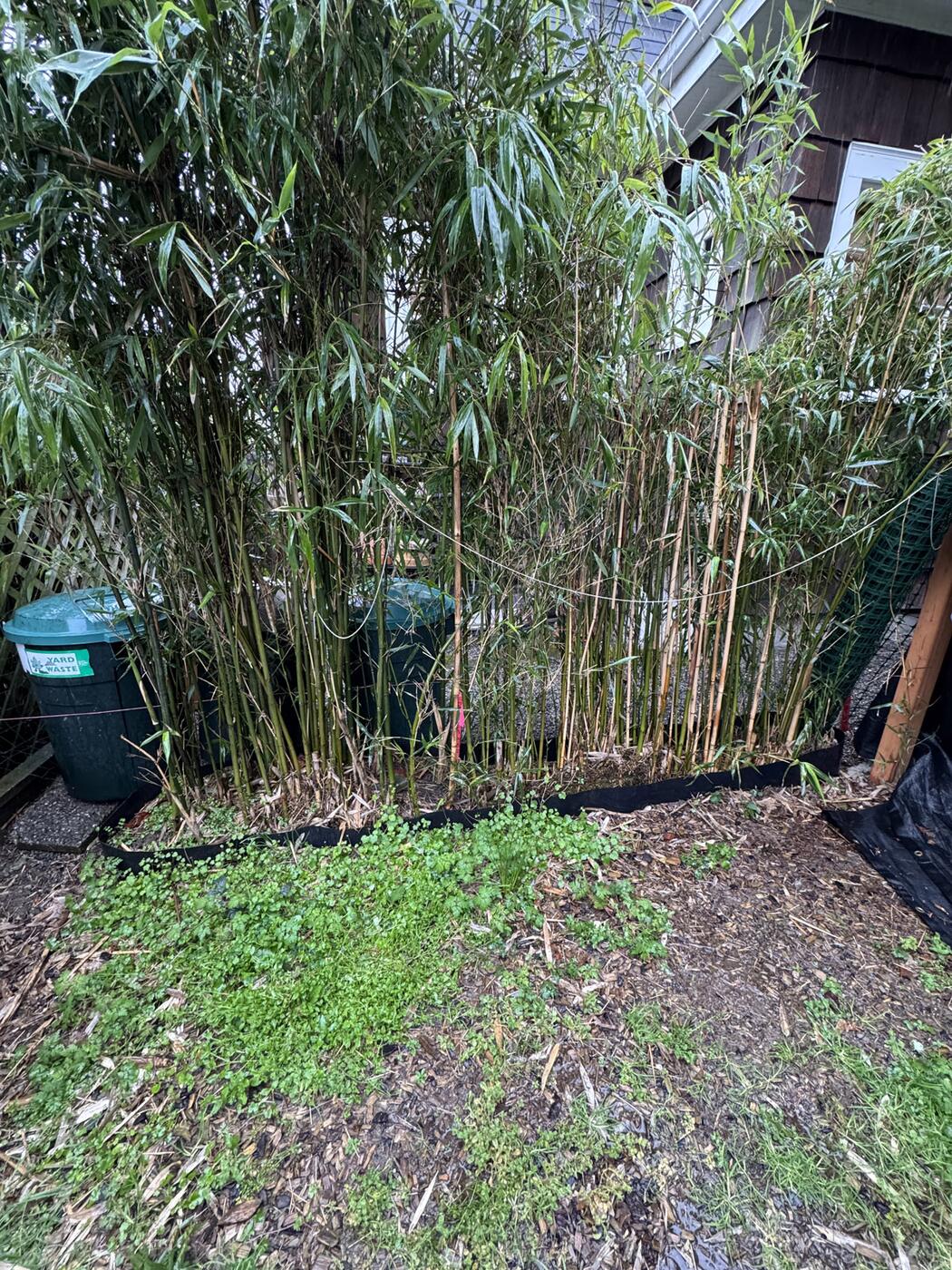
The species will be familiar to anyone who has followed these reports. Rapport No. 3 documented Semiarundinaria fastuosa ‘Viridis’ slipping a doubled barrier by growing in the dark seam between its two layers. It did not breach that barrier either. It found the space the installation provided. On the subject property the rhizomes found their way under the barrier.
Barrier manufacturers’ own instructions assume maintenance, which is quite difficult without damaging the barrier.
This barrier was set too close against an established stand on the property line of the subject property.
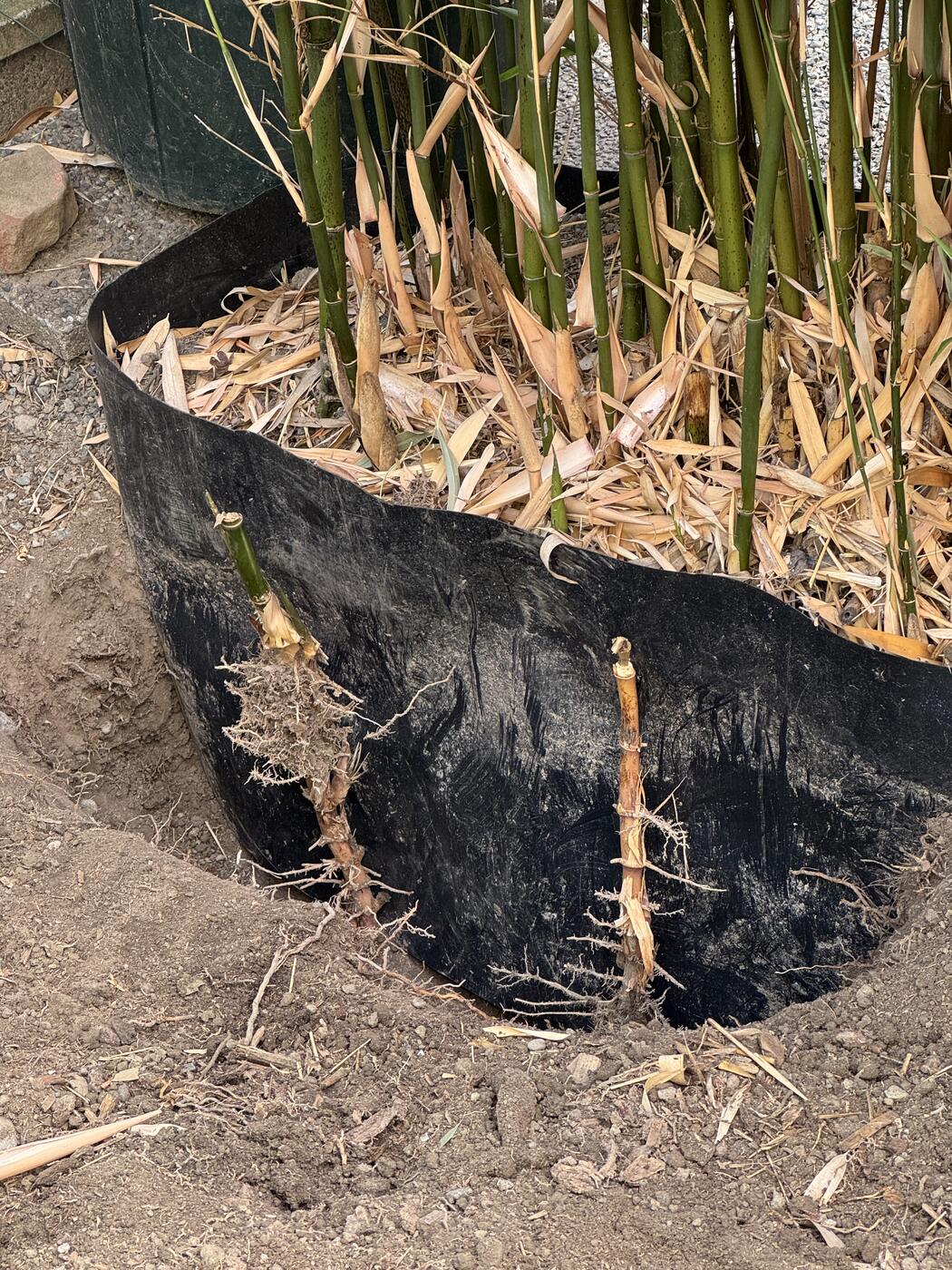
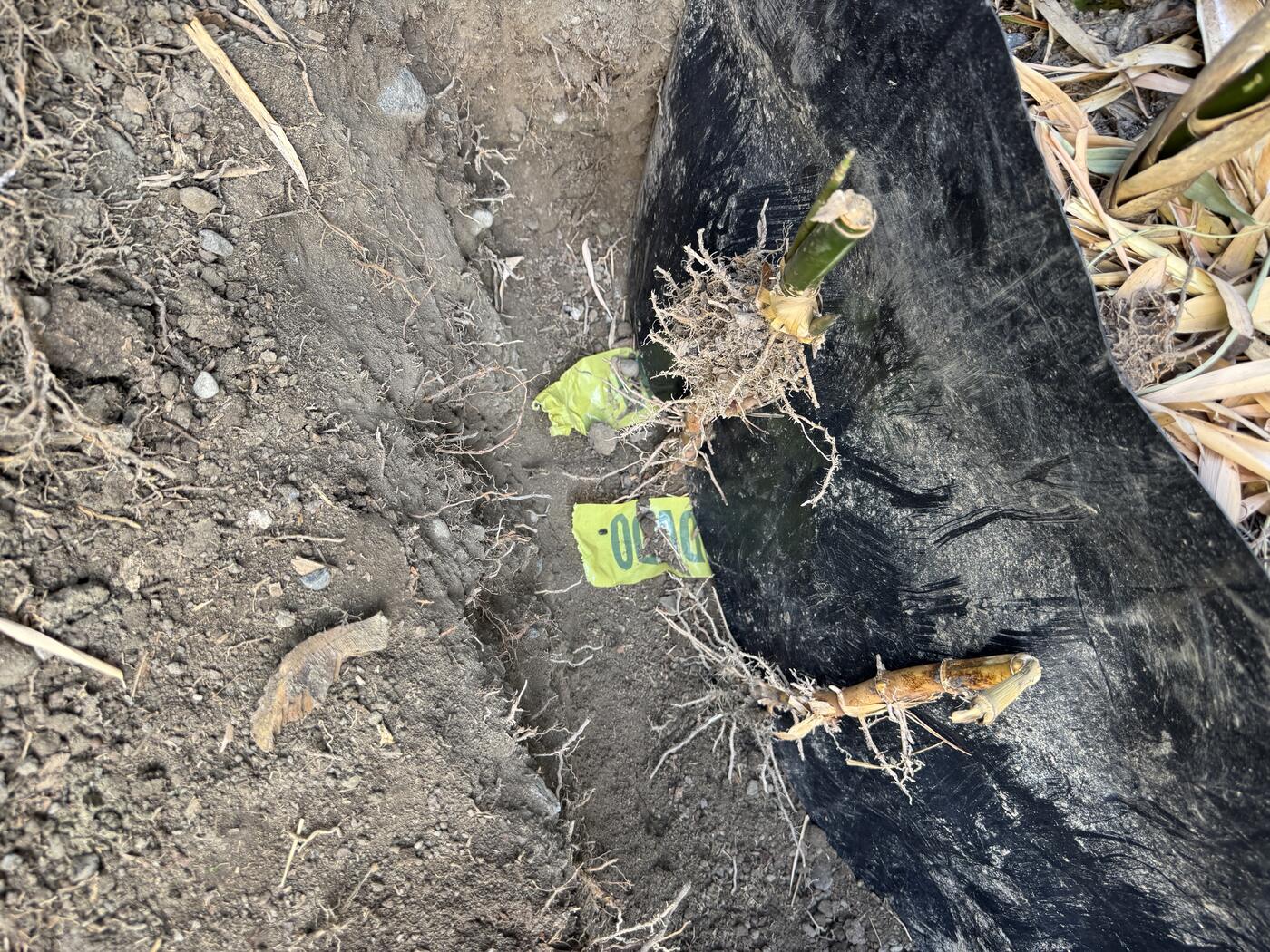
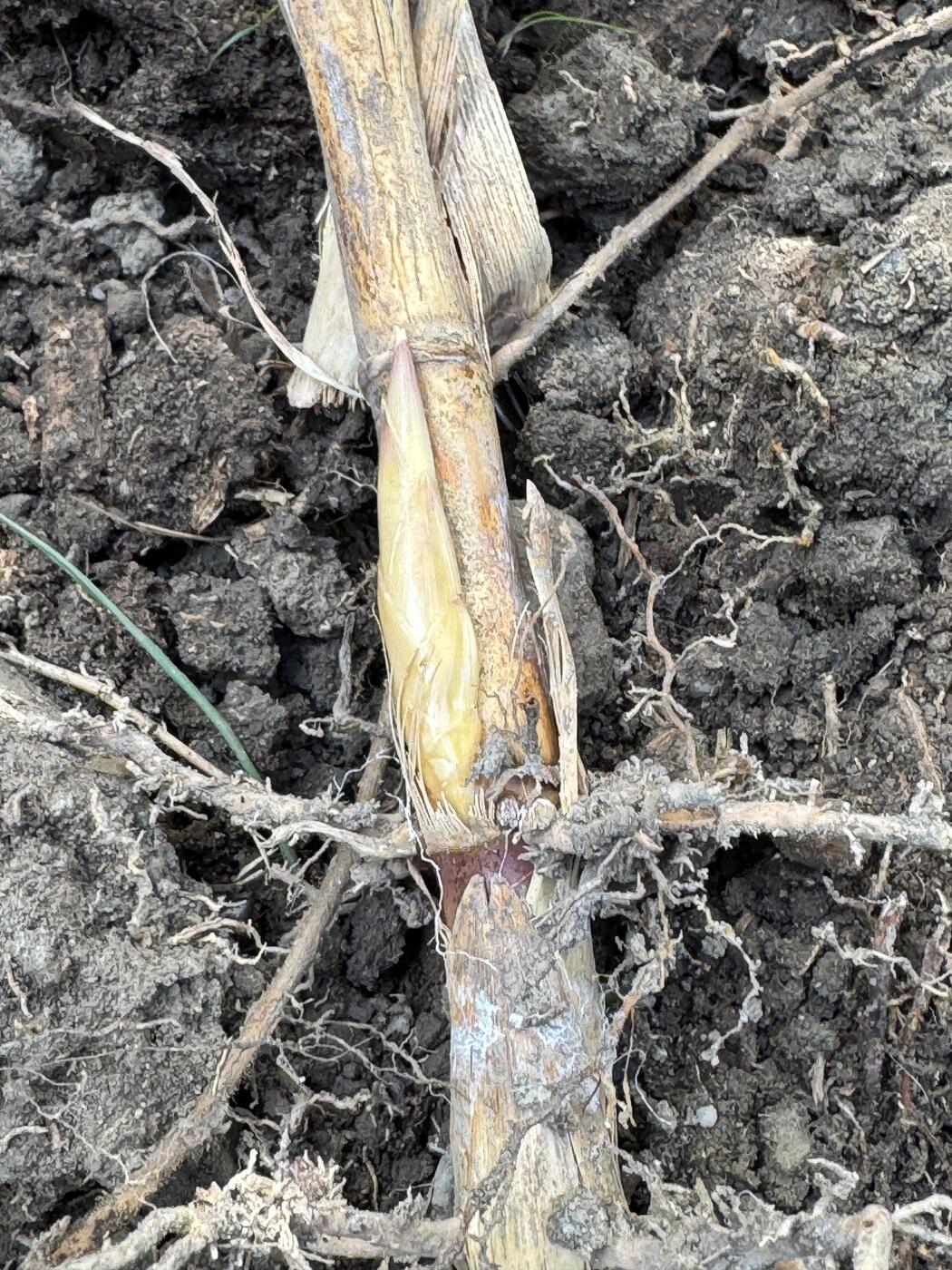
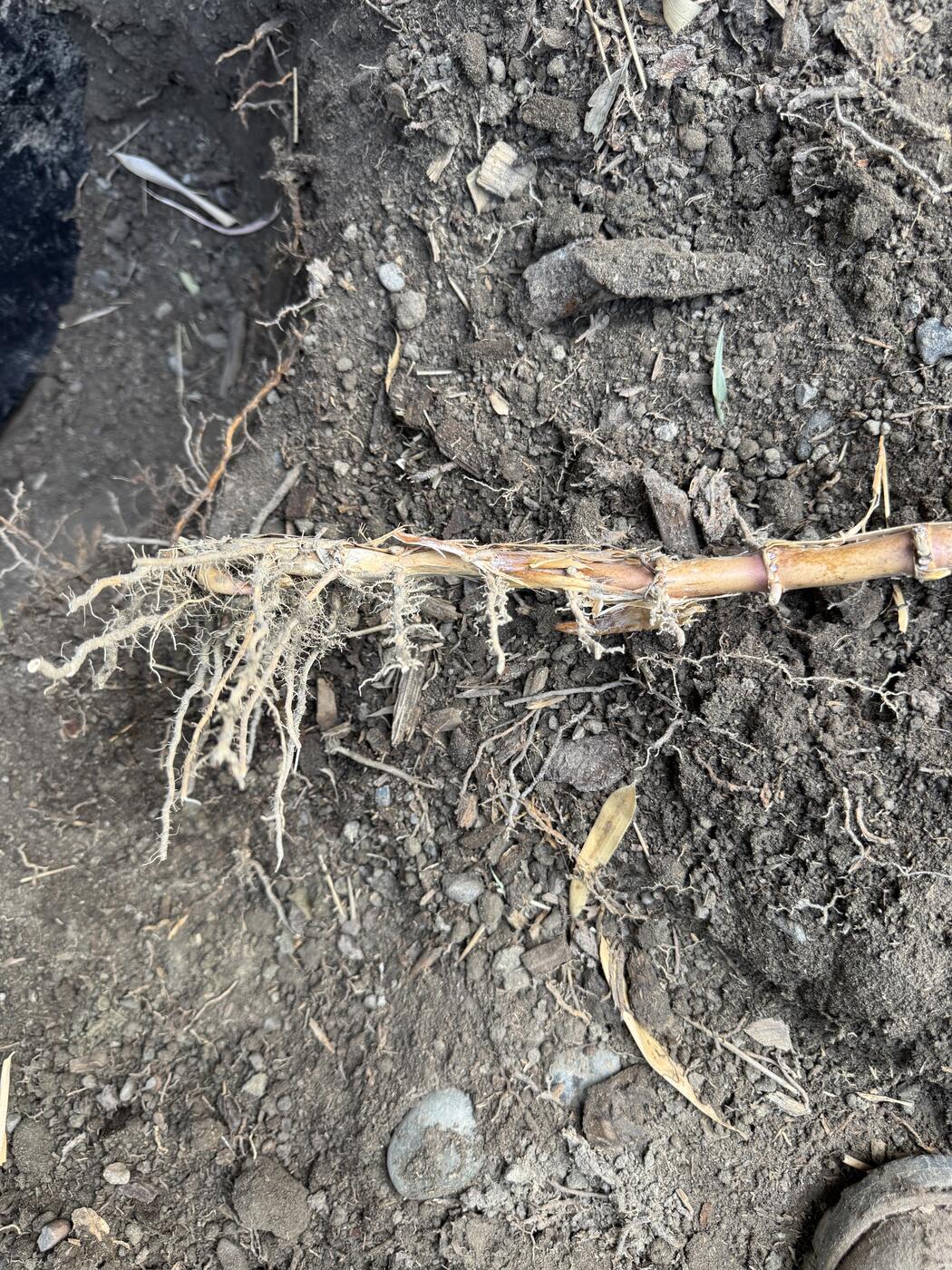
None of this contradicts the product literature. It agrees with it. One manufacturer describes the mechanism on its own product page: the rhizome, while growing, is soft and flexible, and will always turn when it meets any obstruction.
The same literature tells homeowners that bamboo rhizomes grow in the first twelve inches of topsoil. This allows the rhizomes to send a culm straight out of the ground rather than through 2–3’ of soil. Rhizomes only dive deeply because of obstructions.
A barrier actually can accelerate the growth of a bamboo rhizome, and the growth can become more web-like rather than linear.
Seattle Bamboo does not install rhizome barrier. We are not neutral about this and it costs us work, so it is worth saying plainly why: we have spent eighteen years removing bamboo from failed barriers. Putting a hard obstruction in front of growing rhizomes does not end the problem. It relocates it, delays it, and hides it – for a short time.
Species: Semiarundinaria fastuosa. Barrier depth: 30 inches, panels with vertical overlapping joints, set against an established stand. Site photographed April 2026; excavated 11 September 2026.